

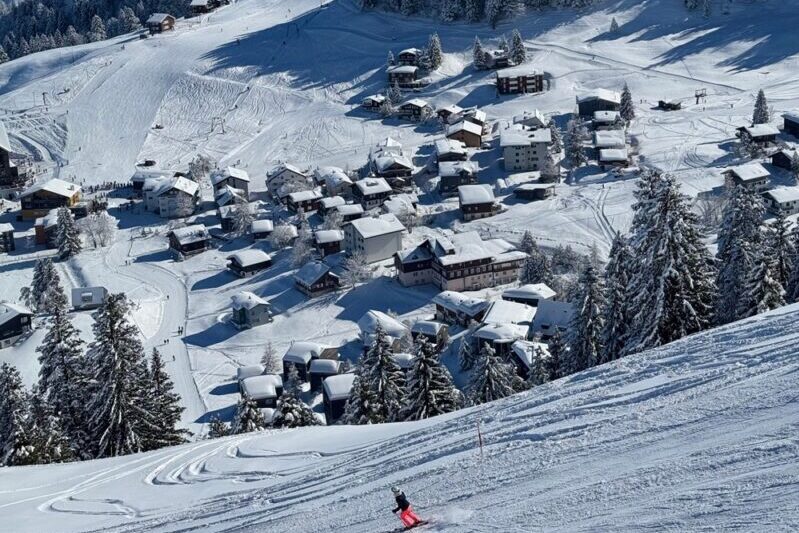
How and where to buy a ski chalet in France
- The problem: The best place to buy a ski chalet? This question has no single answer — resorts that look similar on a map can sit in genuinely different market tiers, for reasons that go well beyond altitude or piste access.
- The stakes: buying against the wrong typology for your goals — prestige versus rental yield versus year-round use — means paying for scarcity you don’t need, or missing the scarcity that actually protects value over time.
- The solutions: understand what structurally limits new supply in the best locations, use objective transaction data rather than asking prices to judge a market, and bring the legal and tax review in before the search narrows down to one property.
Buying real estate in the French Alps is an exciting prospect, whether the goal is an ultra-premium luxury chalet or the best value available in a well-connected resort — but the French legal and tax framework can present genuine specificities for non-residents and expatriates that are worth understanding before the search narrows down to a shortlist. A notaire’s role is to guide international clients through this process with clarity and security, and this guide starts a step earlier: choosing where, and how, to buy.
Location intelligence: profiling market typologies in the Alps
Our role, as notaires, is not to advise on specific resorts — but understanding the market through distinct property typologies helps identify the environment that actually matches an investment strategy, rather than a name that simply sounds prestigious.
- Ultra-prime luxury: highly constrained supply, exceptional ski-in/ski-out access, and premium amenities, attracting a high-net-worth international clientele seeking prestige. Examples: Courchevel (1850), Val d’Isère, Megève, Méribel.
- Premium, snow-sure high altitude: consistent high-altitude snow reliability, favoured by investors seeking dependable winter occupancy and a sports-focused environment. Examples: Val Thorens, Tignes, Courchevel, Val d’Isère, Les Arcs, La Plagne, Les Deux Alpes, l’Alpe d’Huez, and others.
- Multi-season & dual-appeal: year-round appeal through summer hiking and climbing as much as winter sport, positioning the property as a multi-season asset rather than a purely winter one. Examples: Chamonix, l’Alpe d’Huez, Morzine, Les Gets, La Rosière, Pralognan, Megève, the wider Maurienne valley.
- Authentic Alpine village: genuine alpine character, village charm, and a relatively accessible entry point for families seeking a traditional lifestyle. Examples: Saint-Martin-de-Belleville, Samoëns, Châtel, Combloux, Bessans.
Why supply is genuinely constrained in the best locations
The “highly constrained supply” often mentioned about the top resorts is not just marketing language — it reflects a real, mountain-specific planning regime. New tourist developments in mountain communes — new ski lifts, new pistes, new accommodation above certain thresholds — generally require classification as a Unité Touristique Nouvelle (UTN) under the 1985 “Loi Montagne” and its 2016 reform, and depending on scale, this route runs through either the area’s territorial coherence plan (SCoT) or the local urbanism plan (PLU), often alongside an environmental impact study. This is a materially more constrained planning path than lowland development, and it is a structural reason new-build stock in the most established resorts stays scarce relative to demand, rather than simply a function of a fashionable postcode.
Property valuation and market dynamics
Prices in the Alps vary significantly by resort profile rather than purely by the structural quality of the chalet:
| Market typology | Investment profile | Key buyer motivation |
|---|---|---|
| Ultra-prime luxury | Highest entry threshold; highly constrained supply | Prestige, exclusivity, premium asset preservation |
| Premium high altitude | Strong, consistent winter rental yields | Snow-sure conditions and sporting access |
| Multi-season resorts | Diverse property types, dual-season appeal | Year-round lifestyle and steadier rental income |
| Authentic villages | Family-oriented, strong summer season | Alpine charm, quieter surroundings, long-term family use |
Example: two typologies, two price tiers. According to a January 2026 SeLoger/Belles Demeures index, Courchevel averaged around €14,190/m² across chalets and apartments, making it France’s most expensive ski resort, ahead of Val d’Isère at roughly €13,028/m². Val Thorens, despite sharing the same 600km Trois Vallées ski domain as Courchevel, has typically traded at a markedly lower price per square metre in market surveys — illustrating that shared piste access does not automatically mean a shared price tier: ultra-prime and premium snow-sure locations can overlap geographically while sitting in genuinely different market segments.
Please note that we’re only quoting existing sources. This is solely for informational purposes.
For an accurate valuation of a specific property, notarial offices draw on the PERVAL database, updated in real time from authentic deeds signed by notaries across France. Buyers can also cross-check general trends through DVF (Demandes de Valeurs Foncières), the public register of French property transactions published by the tax authorities, though it is less granular than PERVAL’s notarial data.
The legal journey, and what’s specific to ski property
The purchase process itself — the preliminary contract, the technical diagnostics, the notarial deed — follows the same structure as any French property purchase, which we go through in full in our guide to buying property in France. A couple of points matter more in a ski context specifically:
- Financing structure. For highly taxed investors, it can be worth considering whether an amortising loan or an interest-only (“in fine”) loan suits the purchase better — our page on mortgages and loan security covers how the notaire drafts and registers the guarantee acts either way, giving the bank an executory title that accelerates procedures in the event of default without needing a court judgment.
- New-build and off-plan purchases follow their own specific framework (VEFA), which we cover separately in our guide to buying off-plan property in France.
Structuring your investment: the value of a notary
Many non-resident buyers weigh up the risks of navigating the French system without dedicated notarial counsel. Relying on standard internet templates for contracts or leases can lead to poorly drafted clauses that are inapplicable or void, and without proper structuring, a buyer may face unexpected exposure to capital gains tax, wealth tax, or double taxation on gifts, given the limited number of international tax treaties that specifically cover donations.
A notary’s role goes beyond checking the sale itself:
- Strategic structuring. For group or family purchases, it is often worth considering an SCI, or comparing it against indivision or a tontine clause — a genuinely effective way to manage shared ownership, avoid deadlocks, and organise a gradual transmission to heirs. Where the goal is closer to a commercial letting business, a company structure such as a SARL may fit better.
- Tax perspective. A notary can help assess exposure to the wealth tax (IFI), relevant once net French real estate assets exceed €1.3 million — a threshold that a single ultra-prime chalet can reach on its own — and advise on rental frameworks such as LMNP or LMP where letting income is part of the plan. We cover both in detail in our guides to taxation in France and to wealth tax specifically.
- Family protection. Marital regimes and inheritance planning, considered against the international context, help protect a spouse and the family’s long-term position.
Common pitfalls: a quick reference
| Situation | What often goes wrong | Why it matters |
|---|---|---|
| Choosing a resort by name recognition alone | Overlapping ski domains can hide very different price tiers and buyer profiles | Courchevel and Val Thorens share the Trois Vallées but sit in different market segments |
| Assuming “highly constrained supply” is just a sales phrase | The real constraint is a planning mechanism (UTN) specific to mountain communes | Explains why genuinely new stock in top resorts stays scarce over time |
| Relying on asking prices rather than transaction data | Listed prices can diverge meaningfully from what actually completes | PERVAL and DVF both reflect real signed transactions, not asking prices |
| Structuring the purchase only after finding the property | Ownership structure (direct, SCI, company) is harder to change after signing | Early planning avoids unnecessary transfer taxes and legal costs later |
| Overlooking the IFI threshold on a single prestige property | A single ultra-prime chalet can cross €1.3 million on its own | Wealth tax exposure is worth checking before, not after, completion |
Frequently asked questions
Is a more expensive resort automatically a better investment?
Not necessarily — price per square metre reflects the typology and scarcity of a given resort, not automatically its rental yield or long-term suitability for a particular buyer’s goals.
Why do some resorts sharing the same ski domain have very different prices?
Because price reflects positioning (ultra-prime versus premium snow-sure, for instance) as much as piste access — Courchevel and Val Thorens illustrate this well despite both sitting within the Trois Vallées.
What actually limits new construction in the best resorts?
Mountain-specific planning rules under the “Loi Montagne,” which route significant new tourist developments through a UTN classification and, often, an environmental impact study — a materially more constrained process than standard urban planning.
Where can I check real transaction prices rather than asking prices?
Notarial offices use the PERVAL database; the public DVF register offers a comparable, if less granular, alternative for buyers to cross-check general trends themselves.
Sources
- Code de l’urbanisme — Article L.122-15 et seq. (Unités Touristiques Nouvelles)
- SeLoger / Belles Demeures — Immobilier de montagne : les stations de ski les plus chères, January 2026
- DVF (Demandes de Valeurs Foncières) — public register of French property transactions
In summary
Choosing where to buy in the French Alps is as much a question of matching a typology to a goal as it is a question of taste. The best-known resorts earn their prices partly through genuine planning scarcity, not only through reputation, and objective transaction data is a more reliable guide than a listing price. Once a typology and a resort are chosen, the legal path runs through the same notarial process as any French purchase — bespoke enough in its structuring options, particularly for shared or company ownership, that it is worth having reviewed before an offer is made rather than after.
Contact our international team now to secure and optimize your transaction.
You can also call us :
📞+33 (0)4 7924 6222