

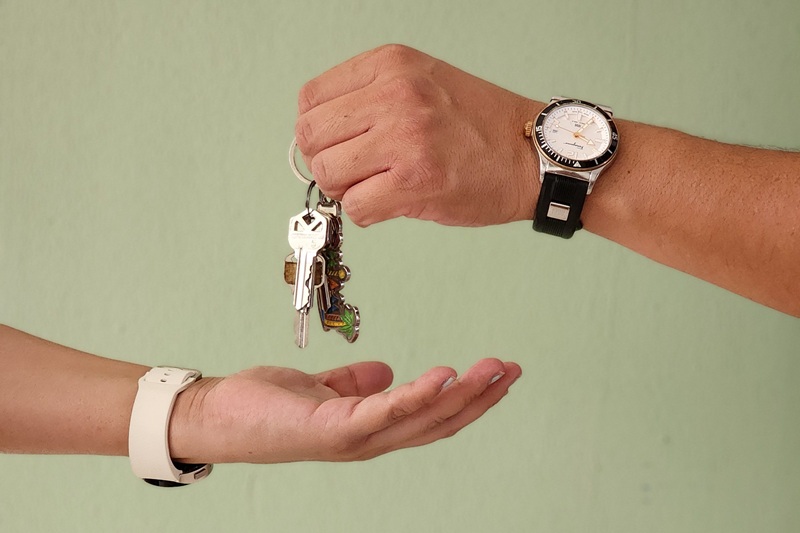
Divorce and French property: what happens to your home in the Alps
The problem
- Gifting French property requires a notarial deed, and French rules on tax and estate planning apply even when the donor and the family live abroad.
- French forced heirship rules protect the minimum shares of children, so a gift to one child and not to others may be challenged when the donor dies.
- French gift tax applies to property located in France whatever the residence of the donor or the recipient, and the UK (or another country) may tax the same gift under its own rules.
- Ski resort properties often exceed the tax-free allowances, and a holiday home given to several children can turn into a co-ownership question.
The stakes
- Tax: allowances of €100,000 per parent and per child, renewable every 15 years, then progressive rates from 5% to 45% in the direct line.
- Family balance: unequal gifts, blended families and children living in different countries can create tensions years later.
- Use and control: many owners wish to keep using the chalet, or receiving its rental income, after giving it.
- Future resale: the value declared in the deed becomes the recipient’s starting point for capital gains tax.
The solutions
- A gift of bare ownership (“nue-propriété”) while keeping the usufruct, which lowers the taxable value (see our guide to usufruct and bare ownership in France). This structure should however be considered carefully by UK tax residents, because of the UK rules on gifts with reservation of benefit.
- A “donation-partage” involving all children, which fixes values at the date of the gift.
- Staged gifts that take advantage of the allowances as they renew every 15 years.
- Gifting shares in an SCI instead of the property itself.
- Coordinating French and foreign advisers before any deed is signed.
Gifting French property is a formal step governed by French civil and tax law, and it works quite differently from an informal family transfer in the UK. The way a gift is structured can shape the tax bill, the rights of other children and the family’s use of a holiday home for decades, which is why legal and tax advice on French real estate is usually taken before a deed is signed. This guide explains how gifts of French property work, how French gift tax is calculated, what changes for non-residents, and which options are commonly considered for chalets and ski apartments in the Alps.
What gifting French property involves
In French law, a gift (“donation”) is a deed by which the donor gives up ownership immediately and, in principle, definitively. A gift of real estate is made by notarial deed (“acte authentique”) : service-public.gouv.fr states that gifts of real estate require the intervention of a notaire and an authentic deed. The tax authority adds that a gift recorded in writing generally has to be notarial (article 931 of the French Civil Code), with exceptions such as manual gifts. The notaire calculates and collects the duties, then files the deed with the land registry within one month of signing.
Two consequences are worth keeping in mind:
- Once signed, a gift can only be challenged in limited situations before a court, for example non-performance of conditions attached to the gift, serious ingratitude of the recipient or, if the deed provides for it, the later birth of a child (service-public.gouv.fr).
- Giving too much may leave the donor with too little flexibility. A notaire will usually ask about the donor’s own resources and needs before drafting the deed.
| Route | Takes effect | Form | Can it be undone? |
|---|---|---|---|
| Gift of real estate (“donation”) | On signing | Notarial deed | In principle no; limited court-based exceptions |
| “Donation-partage” | On signing | Notarial deed | In principle no |
| Manual gift (“don manuel”) | On handover | No deed; declared online to the tax authority | Not available for real estate |
| Gift between spouses (“au dernier vivant”) | On the death of the donor spouse | Notarial deed | Yes, during the donor’s lifetime |
| Will | On death | Written will (notarial form often preferred) | Yes, until death |
Table: main ways of passing on property in France.
Forced heirship: how much can you give?
French law reserves part of an estate to the children or, if there are none, to the surviving spouse. This share is the “réserve héréditaire” (forced heirship), a minimum inheritance described by notaires.fr. The remainder, the disposable portion (“quotité disponible”), can be given freely. The family law implications of a gift are therefore not limited to tax.
| Number of children | Reserved for the children | Disposable portion |
|---|---|---|
| 1 | 1/2 | 1/2 |
| 2 | 2/3 | 1/3 |
| 3 or more | 3/4 | 1/4 |
Table: forced heirship under the French Civil Code (articles 912 and 913, see Légifrance).
Lifetime gifts are taken into account when the estate is settled:
- A gift to a child is generally treated as an advance on their inheritance. It is added back to the estate and counted against that child’s share. This is the rule of “rapport”, a form of hotchpot.
- A parent who wishes to favour one child beyond their share can state in the deed that the gift is made outside the inheritance share (“hors part successorale”). The gift then uses the disposable portion, and any excess may be challenged by the other children through an “action en réduction” (a claim to reduce the gift).
- For a simple gift, the value counted at the donor’s death is the value on that date, not the value at the time of the gift, as explained by the tax authority. In a resort where prices move, that difference can be important.
- Gifts made in the previous 15 years are also added back when succession duties are calculated (“rappel fiscal”), which can reduce the allowance available to the recipient at the donor’s death (service-public.gouv.fr and article 784 of the French General Tax Code). Older gifts are left out of this look-back provided they were declared to the tax authorities. Our guide to French inheritance tax explains the succession side.
Where the donor is British, the law governing the succession is a separate question: a choice of English law in a will, for example, may change the analysis, although French law also provides a compensatory mechanism for children in some cross-border situations (article 913 of the French Civil Code). This cross-border point is developed in our article on French property inheritance and the need for a will.
French gift tax: who pays, allowances and rates
Who pays gift tax in France?
French gift tax (“droits de donation”) is paid by the recipient. The donor may choose to pay it instead, and the amount paid by the donor is not treated as an additional gift (service-public.gouv.fr). The duties are due on the day of the gift and, for a notarial deed, are paid through the notaire.
The calculation follows three steps: estimate the value of the property, deduct the allowances, then apply the scale that matches the family link. French gift tax allowances apply per donor, per recipient, over a rolling period of 15 years. A couple with two children, for example, can give each child up to €200,000 tax-free (€100,000 from each parent), so €400,000 in total.
| Relationship to the donor | French gift tax allowance | Rate on the taxable balance |
|---|---|---|
| Child | €100,000 | 5% to 45% (progressive) |
| Parent or other ascendant | €100,000 | 5% to 45% (progressive) |
| Grandchild | €31,865 | 5% to 45% (progressive) |
| Great-grandchild | €5,310 | 5% to 45% (progressive) |
| Spouse or PACS partner | €80,724 | 5% to 45% (different brackets) |
| Sibling | €15,932 | 35% up to €24,430, then 45% |
| Nephew or niece | €7,967 | 55% |
| Other relatives up to the 4th degree | none | 55% |
| Unmarried partner, friend, more distant relative | none | 60% |
Table: French gift tax allowances and rates in 2026. Source: service-public.gouv.fr, page verified 15 January 2026. A person with a disability benefits from an additional allowance of €159,325.
| Taxable balance after allowance (direct line) | Rate |
|---|---|
| Up to €8,072 | 5% |
| €8,073 to €12,109 | 10% |
| €12,110 to €15,932 | 15% |
| €15,933 to €552,324 | 20% |
| €552,325 to €902,838 | 30% |
| €902,839 to €1,805,677 | 40% |
| Above €1,805,677 | 45% |
Table: French gift tax rates between parents and children.
Allowances already used by earlier gifts within the last 15 years, including manual gifts, reduce what remains available (impots.gouv.fr). A €100,000 gift made in 2015 therefore allows another tax-free gift of the same amount from 2030 (service-public.gouv.fr).
A note on cash gifts.
Helping a child buy a chalet with money rather than giving property follows other rules. Family gifts of money are exempt up to €31,865 per donor and per recipient if the donor is under 80 and the recipient is an adult. A temporary exemption of up to €100,000 per donor (€300,000 per recipient) exists for funding a new-build or off-plan home or energy renovation works, currently scheduled to end on 31 December 2026, with conditions such as use as a main residence or a five-year letting (service-public.gouv.fr). A ski-resort holiday apartment may not fit these conditions, so it is worth checking before relying on them. For the wider tax picture, see our overview of taxation in France.
French gift tax for non-residents and international families
French property is within the scope of French gift tax in every combination of donor and recipient residence. What changes is whether other assets are also taxed in France.
| Situation | What French gift tax covers |
|---|---|
| Donor tax-resident in France | All assets given, in France or abroad |
| Donor abroad, recipient resident in France for at least 6 of the last 10 years | All assets given, in France or abroad |
| Donor abroad, recipient resident in France for less than 6 of the last 10 years | Assets located in France only |
| Donor and recipient both non-resident | Assets located in France only |
Table: territorial rules (article 750 ter of the French General Tax Code). Sources: service-public.gouv.fr, Légifrance and BOFiP. A tax treaty may provide different rules.
Several points deserve attention for British and other foreign families:
- Double taxation. France is linked to few countries by tax treaties covering gifts, so the same gift may be taxed twice. Checking how each country would treat it, and whether any credit exists, is best done before signing.
- UK inheritance tax. Gifts to individuals are usually potentially exempt transfers, which fall outside the estate if the donor survives seven years (GOV.UK). The UK rules on gifts where the donor keeps a benefit, such as continued use of the property, may also be relevant (HMRC manual).
- UK capital gains tax. Giving away an asset is generally a disposal for UK capital gains tax purposes (GOV.UK), which may matter for UK-resident donors. In France, capital gains tax is charged on sales for consideration, so a gift does not trigger it for the donor.
- Gifts signed abroad. A gift of French property signed abroad may be valid under foreign law and yet remain undisclosed to the French tax authority. In that case the French tax position may stay open, because the limitation period generally does not start until the gift is revealed.
- Signing logistics. For donors living abroad, the practical arrangements, including any power of attorney, are worth discussing early.
Donation of bare ownership (“nue-propriété”) in France
Ownership of a property can be split in two. Usufruct (“usufruit”) is the right to use a property and to receive its income without owning it, while bare ownership (“nue-propriété”) is the right to dispose of it, for example by selling or giving it away (service-public.gouv.fr). A donor can give the bare ownership to a child and keep the usufruct: this is a “donation” of the “nue-propriété” with reserved usufruct. The mechanism, the statutory valuation scale and the sharing of costs are explained in our guide to usufruct and bare ownership in France; the points below focus on gifts.
For gift duties, the taxable value of the bare ownership depends on the donor’s age at the time of the gift, under the scale of article 669 of the French General Tax Code. The share of the full value taxed as bare ownership ranges from 10% for a donor under 21 to 90% for a donor aged 91 or over, and it is 60% between 61 and 70, as service-public.gouv.fr illustrates with a donor aged 68. A simulator gives the split for any age.
What this means in practice:
- The donor keeps living in the property, or letting it, and keeps the income.
- At the donor’s death, the recipient becomes full owner without further gift duties (service-public.gouv.fr), subject to the timing point below.
- A reversion of usufruct to the surviving spouse can keep the household stable after the death of one spouse.
- A return clause (“clause de retour”) allows the donor to recover the property if the recipient dies first (service-public.gouv.fr).
- Restrictions on the recipient selling the property may be added in some cases, subject to legal conditions.
Points of attention:
- Running costs. In principle, the usufructuary bears upkeep and the bare owner bears structural repairs (French Civil Code, articles 605 and 606; service-public.gouv.fr), and the deed can adjust this split. In a chalet, roof, façade and snow-load works make this worth settling in writing.
- Selling. Selling the full property generally requires the agreement of both the usufructuary and the bare owner.
- Wealth tax (IFI). The person who keeps the usufruct is generally assessed on the full value of the property, with some exceptions, so a gift of bare ownership may not reduce the donor’s IFI. See our article on French wealth tax.
- Timing. If the donor dies within three months of a gift of bare ownership, the tax authority may presume the property to be part of the donor’s estate for succession duties (article 751 of the French General Tax Code), although this presumption can, in some cases, be rebutted. The donor’s age and health are therefore worth discussing before signing.
Case study: a British couple gifting a Val Thorens apartment
Mr and Mrs Henderson, aged 66 and 64 and living in the UK, jointly own a ski apartment in Val Thorens worth €900,000. They would like their two adult children, Emma and Tom, to inherit it in due course, but they plan to keep using it for family holidays.
With a notaire, they compare giving the full ownership now with giving only the bare ownership. Each parent gives their half, and each child receives an equal share. At their ages, both donors fall in the 61 to 70 bracket, so the bare ownership is valued at 60% of the property.
| Gift of full ownership | Gift of bare ownership (usufruct kept) | |
|---|---|---|
| Taxable value of the whole apartment | €900,000 | €540,000 (60%) |
| Value received by each child from each parent | €225,000 | €135,000 |
| Allowance per child and per parent | €100,000 | €100,000 |
| Taxable balance per child and per parent | €125,000 | €35,000 |
| Duties per child and per parent (approx.) | €23,194 | €5,194 |
| Total duties, four combinations (approx.) | €92,777 | €20,777 |
| Use of the apartment by the parents | Depends on the children’s agreement | Continues for life |
Illustration only: gift duties, 2026 allowances and direct-line scale, no earlier gifts, both donors aged 61 to 70. Property publicity taxes, notaire’s fees and disbursements are not included.
In this illustration, giving the bare ownership lowers the taxable base from €900,000 to €540,000 and the duties by roughly €72,000. The Hendersons would still need to review the UK side with a UK adviser, including inheritance tax, capital gains tax and the UK rules on gifts where the donor keeps a benefit, since they would keep using the apartment. IFI would matter only if their net French real estate exceeds the threshold.
One child or all children: simple gift or “donation-partage”?
A frequent situation in the Alps is a family chalet used by one child more than the others. A gift to that child alone may unbalance the family, and the consequences appear at the succession.
Case study: a chalet in Méribel and three children
Sarah, 72, a British widow living in London, owns a chalet in Méribel worth €1.8 million and UK assets worth €1.2 million. She has three children: Emma, who lives in the Alps and manages the seasonal lets, Tom in London and Lucy in Sydney. Sarah wishes Emma to receive the chalet. If French forced heirship rules apply to her estate, the figures are as follows.
| Item | Amount |
|---|---|
| Estate taken into account (chalet + other assets) | €3,000,000 |
| Reserved for the children (3/4) | €2,250,000, i.e. €750,000 per child |
| Disposable portion (1/4) | €750,000 |
| Maximum Emma may receive in total (her reserved share + disposable portion) | €1,500,000 |
| Value of the chalet | €1,800,000 |
| Amount that may be open to challenge | €300,000 |
Illustration only, simplified. The figures assume the gift is made outside Emma’s inheritance share (“hors part successorale”); otherwise it is treated as an advance on her share.
Tom and Lucy each have €750,000 protected, but the remaining assets (€1.2 million) would give each of them only €600,000. A simple gift of the chalet to Emma could therefore be reduced after Sarah’s death. A “donation-partage” is the usual alternative.
| Simple gift to Emma | “Donation-partage” with all three children | |
|---|---|---|
| Who takes part | Sarah and Emma | Sarah and her children, who are generally all invited |
| Value counted at Sarah’s death | Value at the date of death | Value fixed at the date of the gift |
| Risk of later dispute | The siblings may claim if their reserved share is affected | Generally lower, as the split is agreed and valued at signing |
| Handling the imbalance | Not addressed in the deed | Compensation payment (“soulte”) or other assets for the siblings; a child may also waive the claim in advance (“renonciation anticipée à l’action en réduction”) |
| Gift duties | Allowances and scale by family link | Same allowances and scale as a simple gift |
Sources: impots.gouv.fr, service-public.gouv.fr and notaires.fr.
Gifting shares in an SCI instead of the property
Many foreign owners hold their chalet through an SCI (“société civile immobilière”), often created at the time of purchase (see buying French property through a company). Giving shares rather than the property changes the mechanics.
Case study: a Dutch couple with an SCI in Alpe d’Huez
Mr and Mrs Van der Berg, living in Rotterdam, hold a chalet in Alpe d’Huez through an SCI with a bank loan in the company’s name. They have three adult children and consider giving shares in stages rather than the chalet.
| Gifting the property | Gifting SCI shares | |
|---|---|---|
| Splitting between children | One deed, ownership becomes joint | Shares can be transferred in fractions, over several years |
| Control after the gift | Depends on the structure (for example usufruct) | The parents can remain managers, and can keep the usufruct of the shares to retain management |
| Restrictions on transfers | None specific | The articles may contain approval clauses (“clauses d’agrément”) limiting entry of outsiders |
| Value | Value of the property | Value of the property, less the company’s debts |
| Non-residents | French property is within French gift tax | Shares in a French company are generally treated as French assets, and French real estate held indirectly is also within scope (article 750 ter) |
| Ongoing needs | Co-ownership rules between children | Annual accounts and decisions of the company |
A notaire can assess whether an SCI is suited to the family, and whether the business and company law side, such as the articles and approval clauses, needs updating first. Partial exemptions exist for gifts of shares in companies linked to an economic activity, under strict conditions (service-public.gouv.fr); they should not be assumed to apply to a company that simply holds a family chalet. Giving a shared holiday home to several children can also create joint ownership, covered in our article on joint ownership of French property.
Alpine points to check before gifting
For background on how these properties are bought, see our guide on how and where to buy a ski chalet in France.
| Topic | Why it matters in the Alps | Point to raise with a notaire |
|---|---|---|
| Managed tourism residence (leaseback) | Many resort apartments are let to an operator under a long lease that continues with a new owner | Lease terms and any tax position linked to the original purchase |
| Mortgage | Resort purchases are frequently financed, and the lender may need to be informed | Loan terms; see our page on mortgages |
| Valuation | Prices vary between resorts, buildings and exposures, and the declared value drives gift duties and the recipient’s later gain | The tax authority’s online valuation tools and an independent property valuation |
| Structural repairs | Roofs, façades and snow-load works can represent significant costs after a bare-ownership gift | How the costs are shared, written in the deed |
| Co-ownership between siblings | Decisions on sale, works or letting may need unanimity | Indivision agreement or SCI |
| Wealth tax (IFI) | Non-residents are liable on French real estate above €1.3 million net | Effect of usufruct on who is assessed |
| Resale by the recipient | The starting price for capital gains is the value declared in the gift | Balance between gift duties and later gains |
The value declared in the deed is a two-sided choice. Overestimating it may increase the gift duties, and underestimating it increases the taxable gain when the recipient sells later (notaires.fr).
How a gift is prepared
- Review the family situation: marital regime, children, other assets and the tax residence of each person.
- Value the property with the tax authority’s online tool and, where useful, an independent valuation.
- Choose the structure: full ownership, bare ownership, “donation-partage”, or SCI shares.
- Coordinate with foreign advisers on inheritance tax, capital gains tax and any treaty position.
- Sign the deed before a notaire. If the notaire does not speak your language, a translator chosen by the parties is needed and is mentioned in the deed.
- Pay the duties through the notaire, who files the deed with the land registry within one month.
| Cost item | Basis | Usually borne by |
|---|---|---|
| Gift duties | Allowances, then progressive scale | The recipient (the donor may choose to pay) |
| Property publicity tax | 0.60%, plus 2.37% of that tax as a collection charge, plus 0.10% security contribution (about 0.71% in total) | The recipient |
| Notaire’s regulated fees | Proportional scale on the full-ownership value; for a “donation-partage”, from 4.837% on the first €6,500 to 0.998% above €60,000, before VAT | The recipient |
| Disbursements | Documents and formalities | The recipient |
Sources: impots.gouv.fr and service-public.gouv.fr. The deed can allocate these costs differently, and a notaire provides a detailed estimate.
Common mistakes to avoid
- Giving a property to one child without checking the forced heirship position.
- Declaring a value without a proper valuation.
- Overlooking UK (or other foreign) inheritance tax and capital gains tax.
- Signing a gift abroad without registering it in France.
- Giving so much that the donor keeps too little flexibility.
- Leaving several children as co-owners of a chalet without any agreement on use, costs and sale.
Frequently Asked Questions
Can I gift my French property to my son?
Yes. Nationality and residence do not prevent it: the gift is made by notarial deed, respects the forced heirship rights of other children and is subject to French gift tax. You can give the full ownership or only the bare ownership. Each parent can give a child €100,000 tax-free every 15 years, and the best structure depends on your family situation, which a notaire can review with you.
Who pays gift tax in France?
The recipient pays, unless the donor chooses to pay. If the donor pays, the amount is not treated as an additional gift. For a notarial deed, the duties are paid through the notaire.
What are the French gift tax allowances?
They depend on the family link: €100,000 for a child or parent, €80,724 for a spouse or PACS partner, €31,865 for a grandchild, €15,932 for a sibling and €7,967 for a nephew or niece. They apply per donor and per recipient, and renew every 15 years (see the table above).
What are the French gift tax rates?
Between parents and children the rate is progressive from 5% to 45%. It is 35% then 45% between siblings, 55% for nephews, nieces and other relatives up to the 4th degree, and 60% for other recipients.
Do non-residents pay French gift tax on French property?
Yes. French property is within the scope of French gift tax whether the donor and the recipient live in France or abroad. A treaty may provide different rules, and other countries may tax the same gift, so the foreign position should be checked in parallel.
Is a notaire required to gift a property in France?
Yes. A gift of real estate is made by notarial deed, and the notaire also handles the tax filing and the land registry formalities.
What is a gift of bare ownership in France?
It is a gift in which the donor transfers the bare ownership (“nue-propriété”) to the recipient and keeps the usufruct, so the donor can continue to live in the property or let it. Gift duties are calculated on the bare ownership only, valued according to the donor’s age, and the recipient becomes full owner when the usufruct ends. Our guide to usufruct and bare ownership in France explains the full mechanism.
Can I take the property back after giving it?
In principle no. A gift can only be challenged in limited situations, such as non-performance of conditions or serious ingratitude. A return clause can be added to allow the donor to recover the property if the recipient dies first.
Can I gift French property to an unmarried partner or a stepchild?
An unmarried partner has no allowance and is taxed at 60%, while a spouse or PACS partner benefits from an €80,724 allowance. Stepchildren are generally treated as third parties unless adopted, and recent measures may offer conditional relief, so the current position should be checked.
Is it better to give now or leave the property in a will?
It depends. A gift can use allowances every 15 years, reduce the future estate and, in a “donation-partage”, fix values, but it is in principle definitive. A will stays revocable and takes effect only on death. Many families use both. See our article on French inheritance and the need for a will.
Does a gift reduce French inheritance tax?
It can. Allowances renew every 15 years, a gift of bare ownership is taxed on a reduced value, and gifts older than 15 years (and declared) are left out of the succession calculation. However, gifts made in the previous 15 years are added back when succession duties are calculated, so the benefit depends on timing and on the family situation. Our guide to French inheritance tax covers the succession side.
This article gives general information and does not replace personalised advice. Consider discussing your project with a notaire before signing any document. Figures are those published for 2026 and were last checked in September 2026.
Contact our international team now to secure and optimize your transaction.
You can also call us :
📞+33 (0)4 7924 6222